Student Program – Aksara Peduli 2026 Promotes Circular-Based Food Resilience in Harapan Village, Barru

BARU – Efforts to strengthen food security while increasing community self-sufficiency are continuously being developed through the Student Impact Program – Aksara Peduli 2026. One of the programs present in the community is "Circular Food Village: Empowering Farmer Groups and Women's Farmer Groups through the Integration of Agricultural and Hydroponic Waste for Food Security in Harapan Village, Barru Regency."
This program is designed to develop local potential in Harapan Village through the utilization of agricultural waste and the application of hydroponic technology. The concept is simple: to transform waste that has been underutilized into a resource with practical value while supporting community food availability.
The program's implementation team consists of Rahmat Ariandi, S.Hut., M.Hut. as the team leader, along with Muh. Ikmal Saleh, S.P., M.Si. and Abdul Malik, S.H., M.H. as members.
The team leader, Rahmat Ariandi, S.Hut., M.Hut., expressed his gratitude and appreciation for the trust given through the Aksara Peduli program's success. According to him, the funding support obtained is not merely an administrative achievement, but a mandate to bring tangible benefits to the community.
"We designed this program through participatory discussions with Cinranae Farmer Group and KWT Mekar Sari in Harapan Village, Barru Regency. We utilized local potential, specifically corn and coffee waste, to be processed into organic products and applied hydroponic technology as part of efforts to strengthen community food security," he said.
Building a Circular Food System from Local Potential
The concept of circular food is one of the main approaches in this program. The community is encouraged to see agricultural waste not just as something to be discarded, but as a resource that can still be utilized and processed.
Corn and coffee waste available in the community is directed to be processed into organic products that can support agricultural activities. Meanwhile, hydroponic technology is introduced as an alternative cultivation method that can be carried out more efficiently, including on limited land.
This approach is expected to create a mutually supportive cycle. Agricultural waste can be reused, cultivation activities can continue to be developed, and the results can help meet community food needs and create productive economic opportunities.
Empowering Farmer Groups and Women's Farmer Groups
This program specifically involves Cinranae Farmer Group and KWT Mekar Sari as main partners. The involvement of community groups is an important part because the program is not only oriented towards the application of technology, but also towards increasing knowledge, skills, and community self-sufficiency.
Through guidance activities, the community will gain knowledge and skills in processing agricultural waste, making organic products, and applying hydroponic technology. This knowledge is expected to be applied in daily activities and developed sustainably.
For women farmers, this activity is also an opportunity to strengthen the role of women in supporting family food security. Hydroponic cultivation can be carried out by utilizing available space around the house, so that the community can produce vegetables for consumption and also have the opportunity to develop it into a productive economic activity.
Students Learning Together with the Community
In addition to providing benefits to the community, this program also provides a learning opportunity for students. Students are not only placed as program implementers, but are also directly involved in identifying problems, applying knowledge, building communication, and providing assistance to the community.
Rahmat Ariandi explained that the success of the program is not only measured by the successful implementation of all planned activities, but also from changes in the capacity and empowerment of the community after the program ends.
"As the team leader, I hope that this program becomes a learning opportunity for both the community and the students. Students learn to understand real field problems, while the community gains knowledge and skills that can be developed independently," he said.
Therefore, the team is committed to maintaining the mentoring process, strengthening the institutional capacity of the groups, and ensuring that the applied technology can be used and developed by the community in the long term.
Building Food Security from the Village
The Circular Food Village program is expected to be a concrete step in building community-based food security. Food security does not always have to start from a large scale. By optimizing available potential in the surrounding environment, communities can build a productive, efficient, and sustainable food system.
More than just introducing technology, this program promotes a mindset that local potential can be a solution to local problems. Agricultural waste can be processed into a resource, limited land can still be utilized to produce food, and communities can be the main actors in building their own self-sufficiency.
Through the Mahasiswa Berdampak – Aksara Peduli 2026 program, collaboration between universities and communities is expected to create innovations that not only stop at program activities, but continue to grow and provide benefits after the program ends.
From Harapan Village, Barru Regency, this idea is embodied through a simple but meaningful step: processing waste, planting food, empowering communities, and building food security together.
This program also serves as evidence that universities can be closer to the community, not only through knowledge transfer, but also by presenting solutions, building self-sufficiency, and encouraging sustainable change.
Sustainable Development Goals
Related News
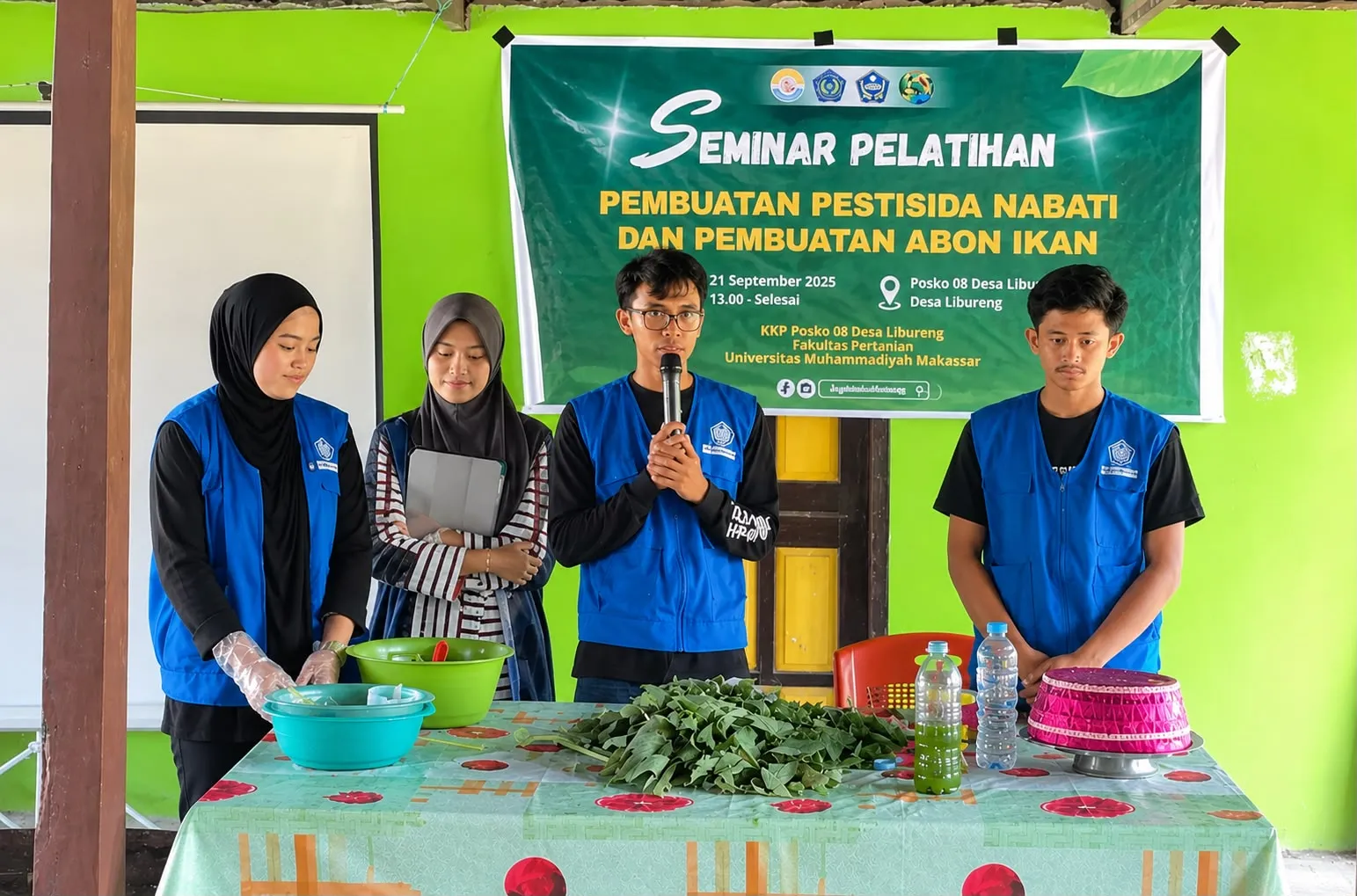
Tekan Hama Penggerek Batang Padi, Mahasiswa KKP 08 Unismuh Makassar Ajarkan Petani Membuat Pestisida Nabati
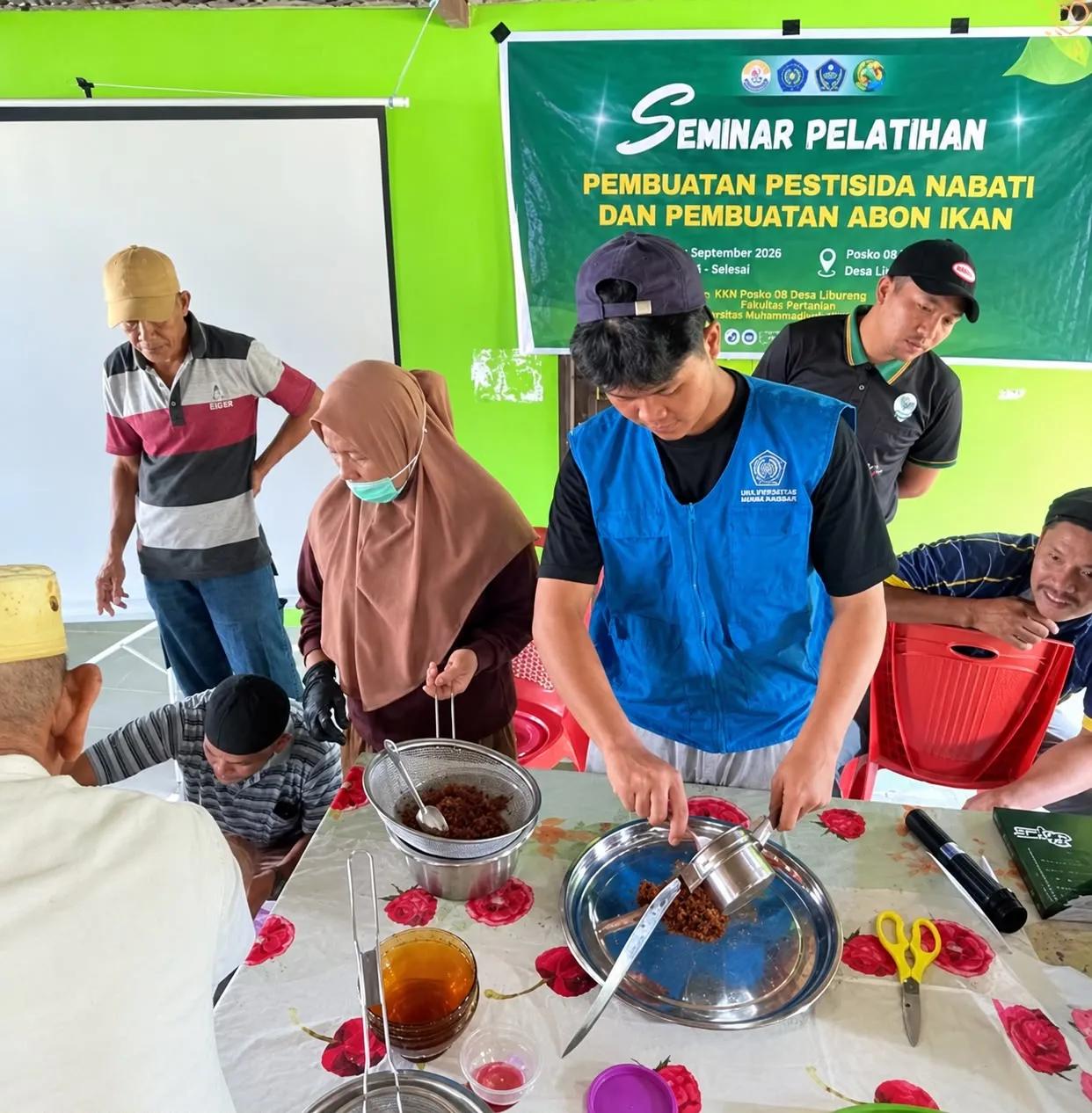
Dari Ikan Jadi Cuan, Mahasiswa KKP Unismuh Makassar Ajarkan Warga Desa Libureng Bikin Abon Bernilai Ekonomi
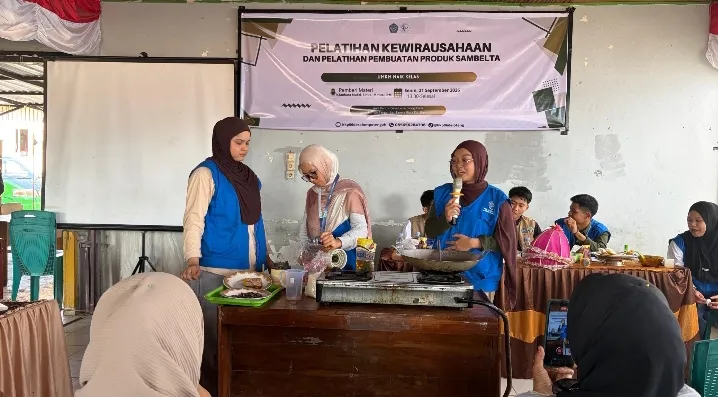
SAMBELTA, Inovasi Mahasiswa KKP Unismuh Makassar Sulap Baje Sungai Jadi Produk Khas Desa Lompo Tengah