Unismuh Makassar Professor Transforms Vegetable Waste into Compost, Results in More Abundant Bok Choy
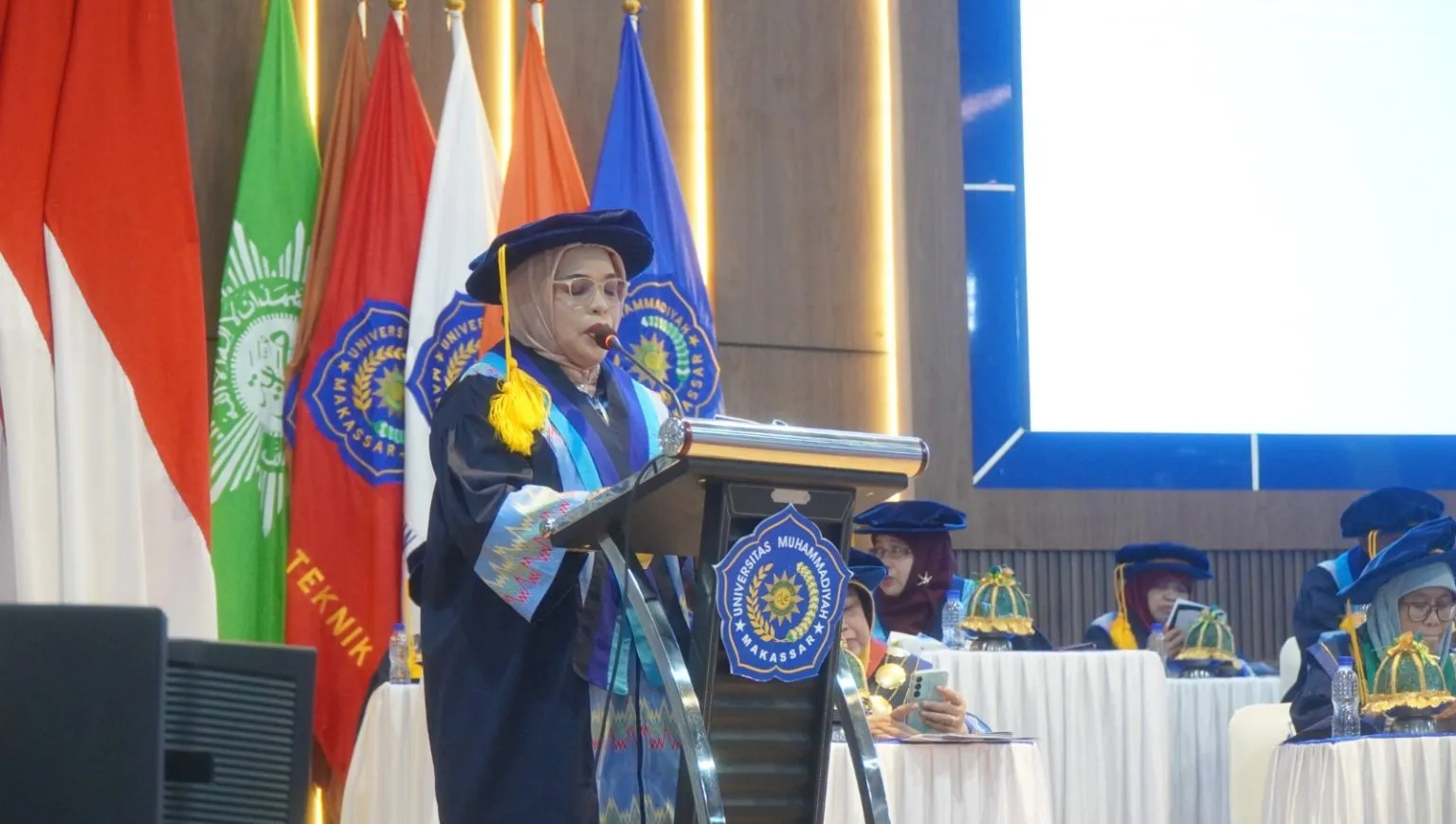
UNISMUH.AC.ID, MAKASSAR – Research conducted by Faculty of Agriculture, Universitas Muhammadiyah (Unismuh) Makassar, offers a model for utilizing vegetable waste compost to improve soil fertility and increase the productivity of pakcoy plants in nutrient-poor soils.
The research has been published in Sustainable Chemistry for Climate Action, Volume 8 Year 2026, article number 100171, published by Elsevier. The article titled "Utilization of Vegetable Waste Compost to Improve Nutrient Availability and Boost Pakcoy (Brassica chinensis L.) Growth on Nutrient Deficient Alfisols" was written by Kasifah, Amanda Patappari Firmansyah, and Muhammad Roil Bilad.
The head of the research team, Prof. Kasifah, stated that the research originates from a problem close to farmers, namely the low fertility of Alfisol soil and the high dependence on chemical fertilizers. On the other hand, vegetable waste from markets is often still considered as waste, but can actually be processed into a source of organic fertilizer.
Read also: Not Just Hand Washing, Unismuh Research Offers a Way to Build a Healthy Culture in Schools
According to a professor from the Faculty of Agriculture, Unismuh Makassar, vegetable waste compost can be a bridge between organic waste management and sustainable agriculture. Waste that has the potential to accumulate and pollute the environment can be returned to the soil as an organic soil amendment.
"This research aims to show that vegetable waste is not just waste. If processed properly, it can be compost that improves the soil, increases nutrient availability, and helps farmers reduce their dependence on synthetic fertilizers," said Kasifah, Tuesday, June 30, 2026.
The research was conducted in a greenhouse and laboratory at the Faculty of Agriculture, Unismuh Makassar. The Alfisol soil used in the research was taken from Gowa Regency, South Sulawesi, while the vegetable waste was collected from Sunguminasa Market.
Processing Market Waste
In the research, the vegetable waste was chopped into small pieces, mixed with wood ash to improve aeration, and then added with EM4 bioactivator. The mixture was composted in an aerobic condition through regular turning.
Kasifah explained that the use of EM4 helps to speed up the decomposition process. The mature compost was then used as a treatment for pakcoy plants with four doses, namely without compost, 10 tons per hectare, 20 tons per hectare, and 30 tons per hectare.
The experiment was conducted using a randomized complete block design. Each treatment was repeated three times, with an observation period of 35 days in the greenhouse. The parameters observed included plant height, number of leaves, fresh weight of the head, fresh weight of the roots, dry weight of the head, and dry weight of the roots.
According to Kasifah, Alfisol soil was chosen because it is widely used for agriculture in tropical regions, including South Sulawesi, but has limitations in terms of nutrient content. In this research, Alfisol soil showed a slightly acidic pH, low organic carbon, low nitrogen, and very limited available phosphorus.
"Soil conditions like this require improvement. Farmers have often relied on chemical fertilizers because the results are visible quickly, but prolonged use can reduce soil organic matter and increase the risk of nutrient leaching," he said.
Pakcoy Grows Better
The research results showed that the application of vegetable waste compost significantly affected the growth of pakcoy. The highest dose, namely 30 tons per hectare, generally gave the best results compared to the control without compost.
In the 30 tons per hectare treatment, plant height increased from 14.2 centimeters in the control to 15.8 centimeters. The number of leaves increased from 9.3 to 10.2 leaves. The fresh weight of the head increased from 10.7 grams to 20.5 grams, while the fresh weight of the roots increased from 2.2 grams to 4.1 grams.
The increase was also observed in dry matter. The dry weight of the head increased from 5.2 grams to 7.1 grams, while the dry weight of the roots increased from 1.3 grams to 1.9 grams. These data show that compost not only affects the growth of the upper part of the plant, but also helps strengthen the development of the roots.
Kasifah said that the better pakcoy growth showed that compost vegetable waste helps to improve nutrient availability gradually. The compost also helps improve soil structure, increase water retention, and support soil microbial activity.
"Pakcoy needs soil that is fertile and loose. When compost is given, the soil becomes better at providing nutrients and water to the plants. The impact can be seen in plant height, number of leaves, and plant weight," he said.
Alternative to Synthetic Fertilizers
The research also emphasizes the importance of finding alternatives to the use of synthetic fertilizers. Chemical fertilizers may provide nutrients quickly, but if used excessively in the long term, they can reduce soil quality and increase the risk of environmental pollution.
Compost works differently. Nutrients are released gradually, so plants obtain a more stable nutrient supply. Slow nutrient release can also reduce the risk of nutrient leaching to the environment.
Read also: Research by Unismuh Lecturers Encourages Innovation of Wells and Biopores to Mitigate Floods
Kasifah believes that this approach is important for tropical agriculture, which faces pressure from climate change, soil degradation, and increasing production costs. By utilizing vegetable waste compost, farmers can obtain a more environmentally friendly organic fertilizer source.
"Compost vegetable waste is not intended to eliminate all other inputs suddenly. However, it can be part of a healthier and more sustainable fertilization strategy for the soil," he said.
In the article, the researchers also emphasized the importance of utilizing compost in line with the principles of the circular economy. Vegetable waste from markets is no longer just waste, but is reprocessed as a productive input for agriculture.
Sustainable Agriculture
For Kasifah, the main contribution of this research is to provide scientific basis that vegetable waste can be used as a soil amendment on Alfisol soil. This finding is relevant for areas that have poor soil fertility, but also face problems with organic waste from urban areas.
He explained that this model can be further developed on a field scale. Further research needs to test the application of compost on farmers' fields, calculate the economic feasibility, and see its impact on the chemical and biological properties of the soil after harvest.
"The greenhouse research provides a strong initial picture. But to be widely adopted by farmers, field testing, cost analysis, and technical assistance are needed," said Kasifah.
The research also sends a message to local governments and market managers. Managing organic waste is not just a matter of cleanliness, but can be linked to urban agriculture, food security, and farmer empowerment.
According to Kasifah, universities play an important role in connecting research, farmers, and public policy. Campuses can help design simple technologies, test their effectiveness, and then encourage their application by the community.
"If market waste can be processed into compost, the benefits are twofold. The environment becomes cleaner, farmers obtain soil amendments, and local food production can increase," he said.
From this research, Unismuh Makassar shows that sustainable agriculture can start from something simple and close to daily life. Vegetable waste that has been thrown away can become a resource to improve the soil, grow plants, and reduce environmental pressure.
This research also reinforces Unismuh Makassar's commitment to achieving Sustainable Development Goals (SDGs). Research on the utilization of vegetable waste compost is related to SDG 2 (Zero Hunger) through support for agricultural productivity and food security; SDG 12 (Responsible Consumption and Production) because it promotes the recycling of organic waste in a circular economy framework; SDG 13 (Climate Action) through reducing dependence on synthetic fertilizers and utilizing organic waste; and SDG 15 (Ecosystems), because it contributes to soil fertility and sustainable land management.
The complete article can be accessed through the link: https://www.sciencedirect.com/science/article/pii/S2772826925001166
Sustainable Development Goals
Related News

Unismuh Makassar Jajaki Kolaborasi BPDP Kembangkan Wirausaha Muda Perkebunan
13 Jul 2026
Prodi Agribisnis Unismuh Makassar Gelar Workshop Peninjauan Kurikulum Berbasis Outcome-Based Education
09 Jul 2026
Dosen Pertanian Unismuh Raih Doktor, Teliti Efisiensi Usahatani Kentang
30 Jun 2026