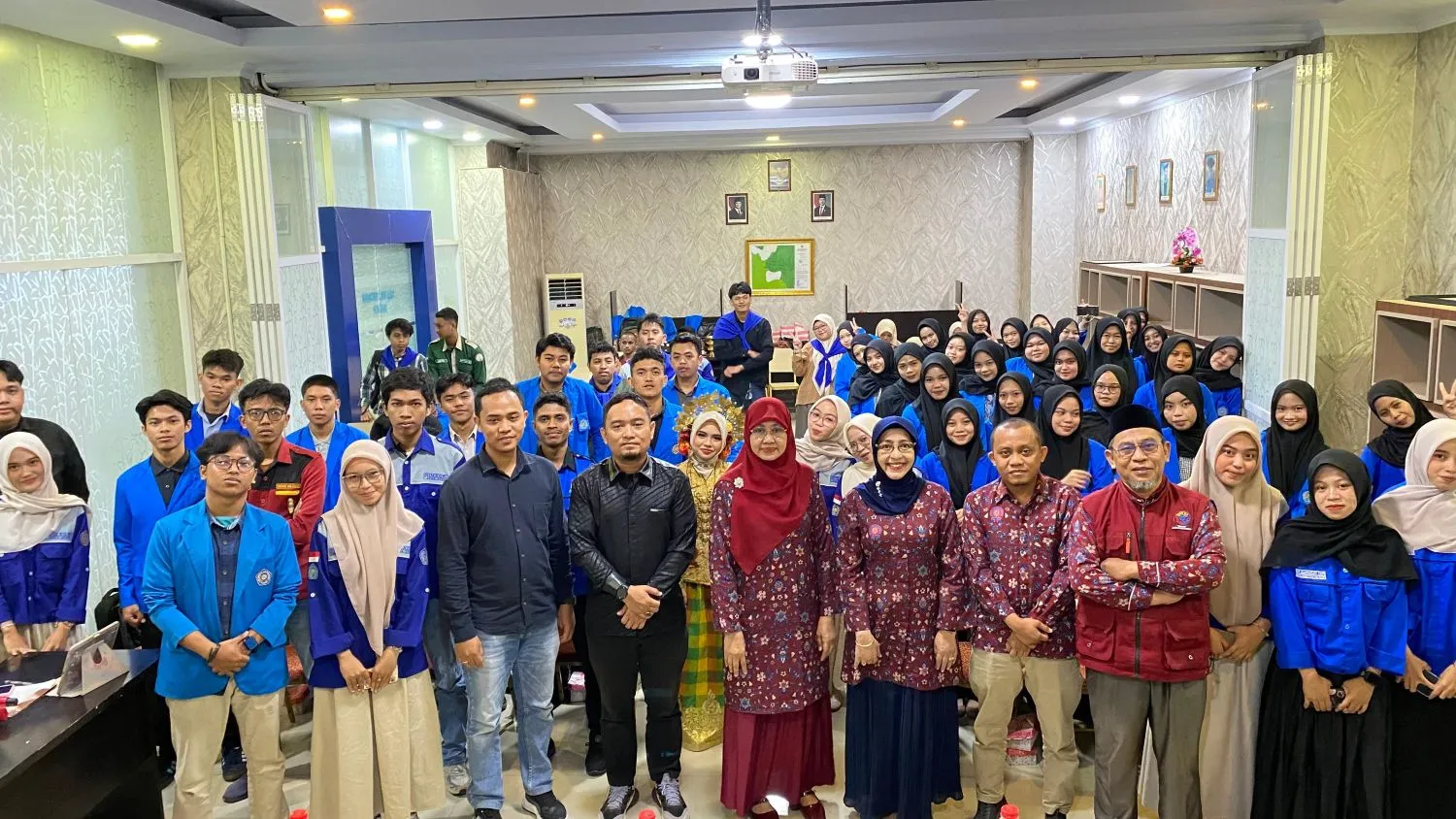
Unismuh Agriculture Department Lecturer Earns Doctorate, Studies Potato Farming Efficiency
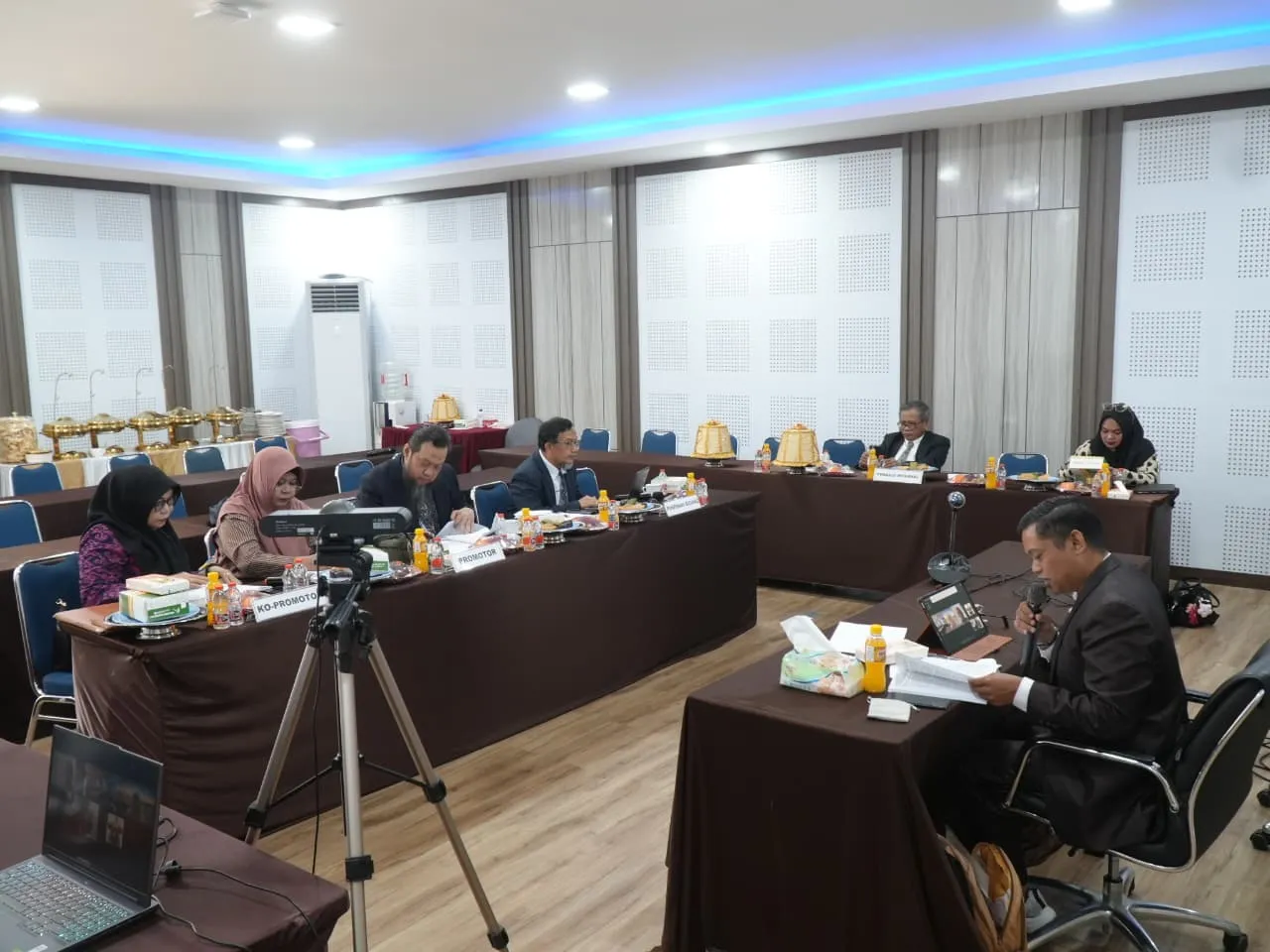
UNISMUH.AC.ID, MAKASSAR — The Smart Class meeting room on the 1st floor of the Faculty of Postgraduate Studies of Hasanuddin University, Tuesday, June 30, 2026, was quiet but attentive. Under the light of white lamps and blue lines on the ceiling, a group of examiners sat facing the neatly arranged exam table.
On the front of the room, Ardi Rumallang sat with a microphone in his hand. He occasionally looked at the tablet on his desk, then raised his hand to explain his dissertation arguments. On the large screen behind him, some of the examinees appeared to be following online. The final dissertation examination took place in a serious, yet warm, academic atmosphere.
On this day, the Faculty of Agriculture lecturer at Muhammadiyah University of Makassar (Unismuh) defended his dissertation titled “Analysis of Input Allocation, Efficiency and Inefficiency in Potato Farming.” Through the examination, Ardi obtained a doctorate degree in the Department of Agriculture, Faculty of Postgraduate Studies, Hasanuddin University.
"This research stems from a problem very close to farmers. Input costs are rising, while farmers must still maintain production and income," said Ardi in his dissertation presentation.
According to Ardi, potatoes are not just a common horticultural commodity. In high-altitude areas like Gowa Regency, potatoes are an important source of income for farmers. However, the success of potato farming is largely determined by the farmer's ability to manage seeds, fertilizers, pesticides, labor, water, and production costs.
"What I want to see is not just whether potato farming is profitable, but also whether the inputs used by farmers are efficient or still wasteful," said Ardi.
Potato Center in Gowa
Ardi's research focused on potato farming in Gowa Regency, specifically in the Tinggimoncong and Tombolopao sub-districts. These two areas are known as the potato production center in South Sulawesi.
In his dissertation, Ardi positioned potatoes as a strategic food commodity, with economic value, and also played a role in diversifying the community's food. Potatoes were also seen as a promising commodity, especially in high-altitude areas with agroklimatic suitability for cultivation.
The research was conducted in three stages. The first stage analyzed production costs, gross margin, profitability index, and financial feasibility of potato farming. The second stage analyzed the impact of input use on potato production with logistic regression. The third stage analyzed the efficiency and inefficiency of input use with Stochastic Frontier Analysis.
Research data was obtained through structured interviews. In the first stage, the research involved 131 potato farmers. In the second and third stages, the number of respondents increased to 223 farmers using simple random sampling.
In front of the promoters and examiners, Ardi explained that the problems faced by potato farmers could not be understood solely from the amount of production. High production does not necessarily mean efficiency. Conversely, good-looking production can be achieved with excessive costs.
"Farmers often work hard, but their combination of inputs may not be the most profitable. That's where the importance of efficiency comes in," said Ardi.
Ardi was supervised by Prof. Dr. Ir. Muslim Salam, M.Ec. as the supervisor, Dr. Letty Fudjaja, S.P., M.Si. as the first co-supervisor, and Pipi Diansari, S.E., M.Si., Ph.D. as the second co-supervisor. The examiners included external examiner Dr. Andi Yulyani Fadwiwati, S.Pt., M.Si., as well as internal examiners Prof. Dr. Ir. Baharuddin, Dipl.Ing., Prof. Dr. Ir. Rahim Darma, M.S., Prof. Dr. A. Nixia Tenriawaru, S.P., M.Si., and Dr. Ir. Heliawaty, M.Si. The promoter team also acted as examiners.
Still Room to Increase Production
Ardi's research showed that potato farming in the study area was financially profitable and worth developing. However, the profits were not fully indicative of the fact that input usage was at the most efficient point.
The average technical efficiency of 0.89 indicated that there was still potential for production to increase by around 11 percent through more optimal input management. Meanwhile, the average economic efficiency of 1.54 indicated that potato farming was not yet fully economically efficient because the combination of input usage was not at the most profitable level.
Ardi's findings also showed that several inputs had an impact on potato production. The variables of potato seeds, cattle manure, NPK Ponska fertilizer, urea fertilizer, insecticides, and watering frequency had a positive impact on production. Conversely, the use of herbicides and spacing between rows had a negative impact on production.
"Seeds, fertilizer, and watering are important. But their use must be correct. If not, the input that should help production can actually increase costs and reduce efficiency," said Ardi.
He gave an example, the farmer's distance from the garden can influence the intensity of plant management. The further the garden from the house, the more challenging it is for farmers to monitor and water the plants as well as control pests quickly.
In the examination room, Ardi's presentation was repeatedly met with notes and questions from the examiners. The neatly arranged tables around the room created an open discussion. On one side, the promoter and co-promoters were examining the documents. On the other side, the examiners were taking notes on the methodological and policy implications of the research.
Ardi asserted that the results of his research were not intended only to add academic literature. He hoped that the findings could help farmers and policymakers understand the importance of input management in potato farming.
"Farmers need support, not just in the form of production means, but also knowledge, guidance, and strong institutions," said Ardi.
Growing from Unismuh Agribusiness
This doctorate achievement was part of Ardi's long journey in the world of agribusiness. He was born in Biringpanting, Gowa Regency, on August 10, 1987. Ardi is married to Marwah, S.P., and has two children, Fuqaih Aziz Fatahillah and Fuqayah Azizah Fatahillah.
In his dissertation, Ardi expressed his gratitude to his father, H. Rumallang, and his mother, Hj. Najang, and to his in-laws, M. Sabar and Kartini. He also expressed his gratitude to his wife and two children for their patience and support during his doctoral studies.
Ardi's education journey began at SDI Biringpanting, Gowa Regency. He then continued his education at MTsM Datarang and SMA Negeri 1 Tinggimoncong. After that, he completed his undergraduate degree in the Agribusiness Program at the Faculty of Agriculture, Unismuh Makassar in 2010, and then obtained a master's degree in the Agribusiness Management Postgraduate Program at Unismuh Makassar in 2012.
His academic career continued as a permanent lecturer at the Agribusiness Program at the Faculty of Agriculture, Unismuh Makassar. He is recorded with NIDN 0910088702 with a functional position of Lektor.
Outside the lecture hall, Ardi has a long field experience. He was previously a Field Liaison Coordinator for the Directorate General of Plantation Affairs, placed in Bantaeng Regency from 2011-2020. In the Unismuh Makassar environment, he previously served as Deputy Dean IV of the Faculty of Agriculture from 2017-2025. Since 2025, he has been entrusted as Chairman of the Student Leadership Guidance Division at Muhammadiyah University of Makassar for the period 2025-2029.
Ardi's publication track also shows his consistency in agricultural, agribusiness, and potato farming issues in Gowa Regency. Several of his articles discuss the sharing and income of potato farmers in the Erelembang village, the structure and performance of potato marketing in Tombolopao, and potato vegetable farming patterns in the same area.
Some of the contents of his dissertation have been presented at The 4th International Conference on Environmental Ecology of Food Security (ICEFS) in Merauke, South Papua, with the title "Gross margin, profitability index, and financial feasibility analyses of potato farming: Empirical facts from Gowa Regency, Indonesia." The article has been published in IOP Conference Series: Earth and Environmental Science. Other parts of the dissertation have also been developed into articles titled "Examining the effect of farm and farmers’ characteristics and input allocation on potato production."
As the examination drew to a close, the atmosphere in the Smart Class room remained orderly. Ardi returned to review the notes in front of him, then answered the examiners' questions in a calm tone. The online participants were still seen following the progress of the examination. On the examiner's tables, the dissertation documents, laptops, and notes were neatly arranged, marking a serious academic process.
For Unismuh Makassar, Ardi's achievement adds to the list of doctors in the Faculty of Agriculture. More than just a personal achievement, this doctorate degree strengthens the university's capacity in agricultural research, agricultural publications, and community service.
"I hope that the research can return to the farmers. Agricultural knowledge must benefit those who work on the land," said Ardi.
From the examination room, one message stood out. Agricultural research is not just about numbers, models, and tables. It must return to the farm, touch the lives of farmers, and provide direction for more efficient, sustainable, and community-oriented agricultural policies.
Sustainable Development Goals


Related News

Unismuh Makassar Jajaki Kolaborasi BPDP Kembangkan Wirausaha Muda Perkebunan
13 Jul 2026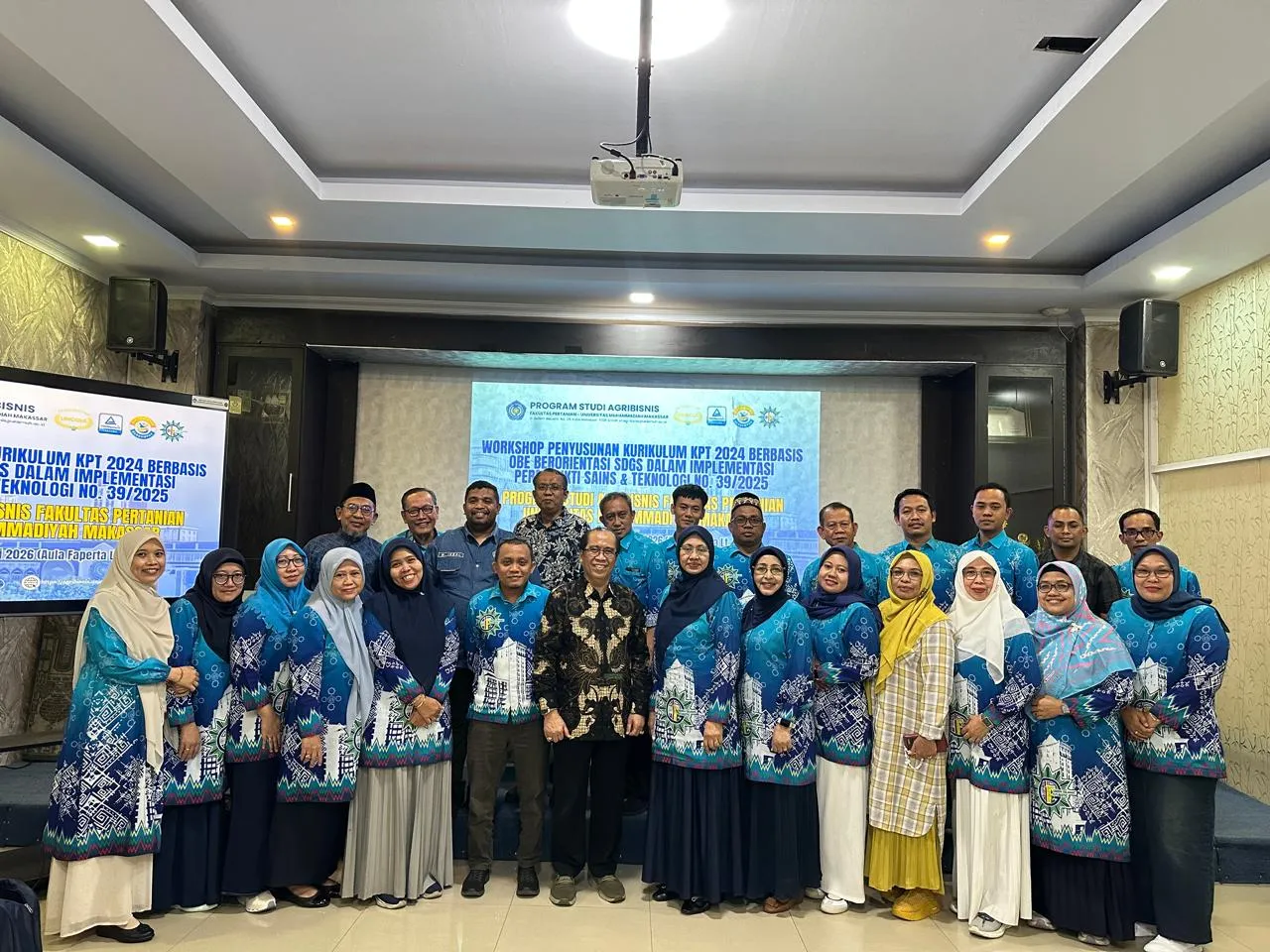
Prodi Agribisnis Unismuh Makassar Gelar Workshop Peninjauan Kurikulum Berbasis Outcome-Based Education
09 Jul 2026
Guru Besar Unismuh Makassar Ubah Limbah Sayur Jadi Kompos, Hasilnya Pakcoy Makin Subur
30 Jun 2026