Behind the Collapse of Coastal Economy, Unismuh Makassar Lecturer Finds Six Patterns of Income for Seaweed Farmers
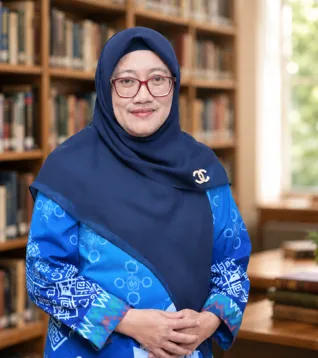
UNISMUH.AC.ID, MAKASSAR – The seaweed farmers in the coastal areas are not only strengthened from the production side, but also need to be supported through diversification of businesses, strengthening institutions, access to financing, product processing, and market expansion in order to be able to withstand fluctuations in prices, climate change, and plant diseases.
This finding is one of the important findings in the research conducted by lecturers at the Faculty of Agriculture, Universitas Muhammadiyah (Unismuh) Makassar, regarding the diversification of seaweed farmers' livelihoods in Takalar Regency, South Sulawesi.
The research was published in Journal of Global Innovations in Agricultural Sciences, Volume 14 Number 2 Year 2026, pages 595–607. The article entitled "Integration of Seaweed Cultivation, Agricultural and Non-Enterprises: A Comparative Analysis of Livelihood Diversification in Takalar Regency, South Sulawesi" was written by Asriyanti Syarif, Rahmawaty Andi Nadja, Darmawan Salman, and Andi Adri Arief.
Read also: Professor from Unismuh Makassar Turns Vegetable Waste into Compost, Results in Healthier Pakcoy
The Head of the Research Team, Asriyanti Syarif, said that this research was based on the reality of seaweed farmers' livelihoods, which are vulnerable to price changes, weather, disease attacks, limited market access, and the increasingly limited cultivation area in coastal areas.
According to the lecturer from the Faculty of Agriculture, Unismuh Makassar, the seaweed farming households in Takalar not only carry out farming activities, but also build survival strategies through agriculture, fisheries, and non-agricultural businesses.
"Seaweed farmers face very dynamic risks. Prices can fluctuate, weather can change, diseases can attack, and cultivation locations can be limited. Therefore, livelihood diversification is an important strategy to ensure that farming households can survive," said Asriyanti, when confirmed on Monday, January 19, 2026.
The research was conducted in Laikang Village, Mangarabombang Subdistrict, Takalar Regency. This coastal village was chosen because it is known as one of the potential development areas for seaweed cultivation, but at the same time faces significant economic and ecological pressures.
The research used a qualitative case study approach. Data was collected through in-depth interviews, observations, and document studies involving 41 seaweed farmer households spread across several villages in Laikang Village.
Six Livelihood Patterns
In the research, the research team found six patterns of livelihood diversification for seaweed farmer households. The first pattern is households that only rely on seaweed cultivation as the main source of income.
The second pattern is households that combine seaweed cultivation with agricultural activities, such as rice, corn, and green beans. The third pattern is households that combine seaweed with fishing activities, such as catching fish, lobster farming, or seaweed farming.
The fourth pattern is households that combine seaweed, agriculture, and fishing. The fifth pattern is households that combine seaweed, agriculture, and non-agricultural businesses.
The sixth pattern is households that combine seaweed cultivation with non-agricultural businesses, such as shops, workshops, construction workers, seafood traders, boat builders, and hair salons.
Asriyanti explained that these findings show that coastal farmers have strong adaptive capabilities. They do not just wait for conditions to improve, but actively seek alternative sources of income according to available capital, skills, land, social networks, and economic opportunities.
"This diversification is not just a side business. For farming households, it is a survival strategy, an investment strategy, and a way to reduce risks when seaweed farming is disrupted," said Asriyanti.
In the framework of sustainable livelihoods, this research identifies five types of assets used by farmers, namely natural capital, human capital, physical capital, social capital, and financial capital. The combination of these five capitals determines the farmers' ability to face economic and environmental pressures.
Vulnerable to Prices and Climate
One of the main problems found in this research is the fluctuation of seaweed prices. Prices at the farmer level can change dramatically, affecting household income stability.
The article states that seaweed prices were in the range of IDR 45,000 per kilogram in August 2022, then fell to around IDR 13,000 per kilogram in March 2025. Such price changes make it difficult to predict farmers' income.
In addition to prices, farmers also face ecological pressures. Changes in the weather, heavy rainfall, declining water quality, unfavorable currents, and plant diseases such as ice-ice can reduce the quality and yield of seaweed.
Asriyanti said that this vulnerability makes livelihood diversification a necessity, not just an optional addition. When seaweed farming fails or prices drop, other income sources can help families meet basic needs.
"If a household only relies on one commodity, they are more vulnerable when prices fall or harvests are disrupted. But when there is agriculture, fishing, or other small businesses, this pressure can be reduced," said Asriyanti.
The research also found a problem of limited cultivation locations. Some farmers had to find further locations to plant due to limited space around the village. This condition increases transportation costs and increases production burdens.
Women in the Production Chain
In seaweed cultivation practice, families are the main workforce. Husbands, wives, and children are involved in various stages of production, starting from preparing ropes, tying seedlings, setting up trays, harvesting, and drying the harvest.
Women play an important role, especially in the process of tying seedlings and post-harvest. However, the research also noted that women's role in strategic decision-making is still limited.
Asriyanti assessed that these findings are important because the sustainability of coastal households' economies cannot be separated from women's work. Therefore, farmer empowerment programs need to provide more space for women in training, product processing, access to finance, and decision-making.
"Women are not just helpers in the family business. They are an important part of the seaweed production chain. Therefore, empowering seaweed farmers must also provide space for increasing women's capacity and economic roles," said Asriyanti.
According to Asriyanti, strengthening women's roles can open up new economic opportunities, especially in seaweed processing businesses. By processing, the products can be sold as raw materials, but can also have added value.
Institutional Weakness in Farmers
The research also highlighted the weakness of farmer integration in groups. Many farmers have not joined seaweed cultivation groups, joint business groups, or fishing groups.
As a result, their access to support, guidance, training, and market information is limited. The article mentions that government assistance, such as ropes, boats, and production facilities, is generally channeled through groups.
Therefore, farmers who are not in groups have difficulty accessing institutional support. This is because institutions are key to increasing farmers' bargaining power.
Through groups, farmers can obtain information about technology, access support, strengthen market connections, and build business partnerships.
"The problem of seaweed farmers is not just about production. They also need strong institutions to access better training, support, financing, technology, and markets," said Asriyanti.
In addition to institutions, access to finance is also a problem. Some farmers use loans from banks, microfinance institutions, or traders. However, access to finance is not always accompanied by business management strengthening.
As a result, farmers remain vulnerable to debt pressure and income fluctuations. Therefore, the research recommends strengthening institutional support, increasing farmers' capacity, accessing fairer markets, and developing locally-based diversification businesses.
Policy Recommendations for Coastal Areas
According to Asriyanti, the main contribution of this research is to provide an overview that strengthening the economy of seaweed farmers is not enough if it is only done through increasing production.
The local government also needs to see the structure of coastal households' livelihoods more holistically. Coastal development policies, according to her, must combine seaweed cultivation, agriculture, fisheries, small businesses, strengthening institutions, access to finance, and product processing.
Read also: Not Just Hand Washing, Unismuh Lecturers Offer a Way to Build a Healthy Culture in Schools
Only in this way can farmers not just be raw material producers, but also more empowered economic actors.
"If you want seaweed farmers to be more prosperous, the approach cannot be partial. Production needs to be improved, but institutions, markets, processing, access to finance, and diversification must also be strengthened," said Asriyanti.
This research also sends a message for the development of the blue economy in South Sulawesi. Seaweed is not only an export commodity, but also the main source of income for many coastal families.
Therefore, the sustainability of seaweed businesses is closely related to the social and economic resilience of coastal communities. The local government can use the results of this research as a basis for designing more targeted seaweed farmer empowerment programs.
These programs can include seaweed farming adaptation training, product processing, strengthening groups, access to finance, and market development.
From Laikang Village, Unismuh Makassar's research on seaweed farmers shows that farming households have strong resilience. But this resilience needs to be supported by policies, institutions, and economic access that are more just so that farmers can not only survive, but also develop.
This research also emphasizes Unismuh's commitment to achieving Sustainable Development Goals. Research on diversification of seaweed farmer livelihoods is related to SDG 1 about Poverty Eradication, SDG 2 about Zero Hunger, SDG 5 about Gender Equality, SDG 8 about Decent Work and Economic Growth, and SDG 14 about Ocean Ecosystems.
The full article can be accessed through the link: https://laravel.jgiass.com/pdf-reader.php?file=Integration-of-Seaweed-Cultivation,-Agricultural-and-Non-Enterprises:-A-Comparative-Analysis-of-Livelihood-Diversification-in-Takalar-Regency,-South-Sulawesi.pdf&path=issue_papers
Sustainable Development Goals


Related News

Unismuh Makassar Jajaki Kolaborasi BPDP Kembangkan Wirausaha Muda Perkebunan
13 Jul 2026
Prodi Agribisnis Unismuh Makassar Gelar Workshop Peninjauan Kurikulum Berbasis Outcome-Based Education
09 Jul 2026
Dosen Pertanian Unismuh Raih Doktor, Teliti Efisiensi Usahatani Kentang
30 Jun 2026