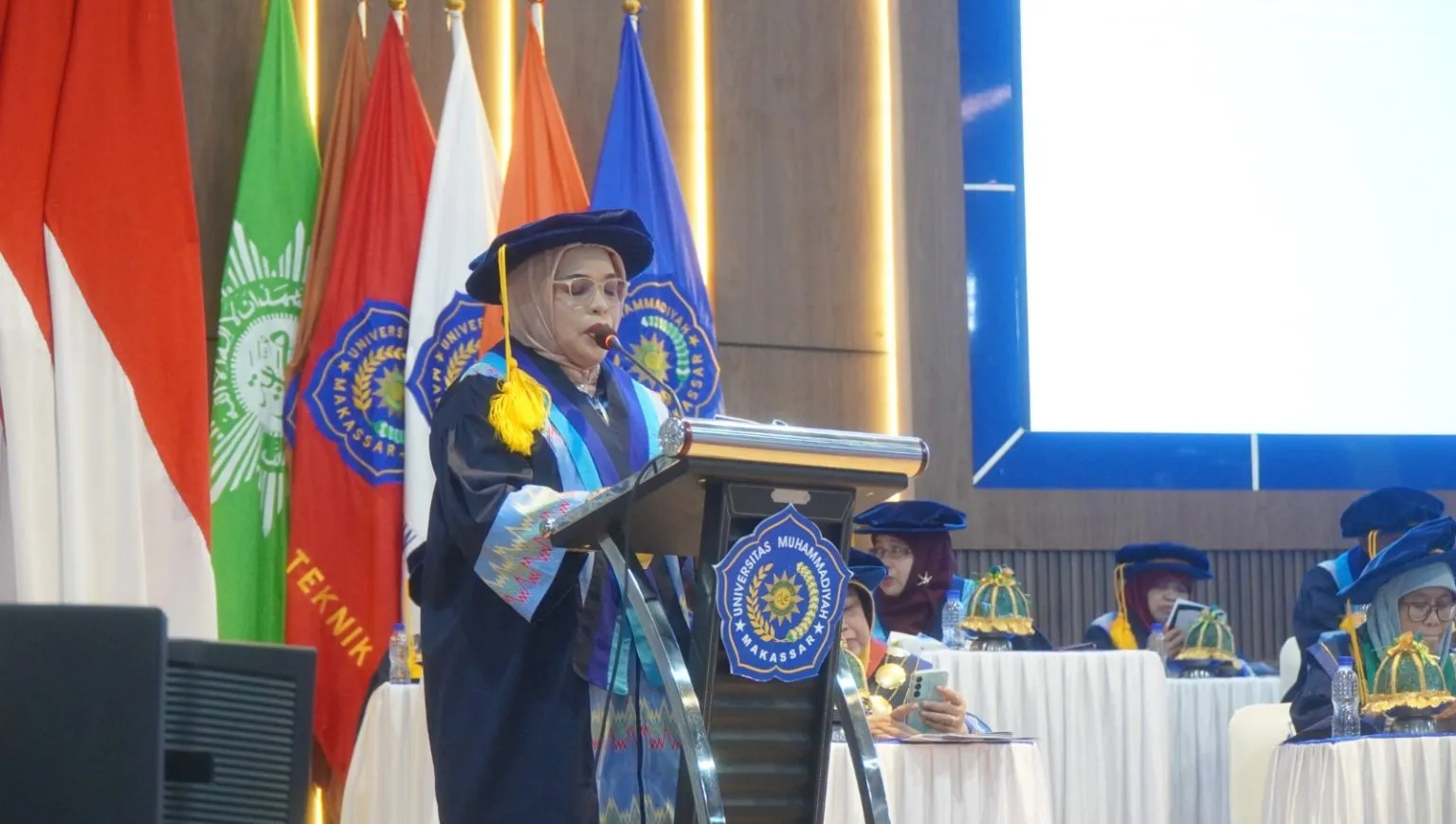
Reflection of Unismuh's Kartini Day, Professor Ratnawati Tahir: Kartini and the Spirit of Women in Academia
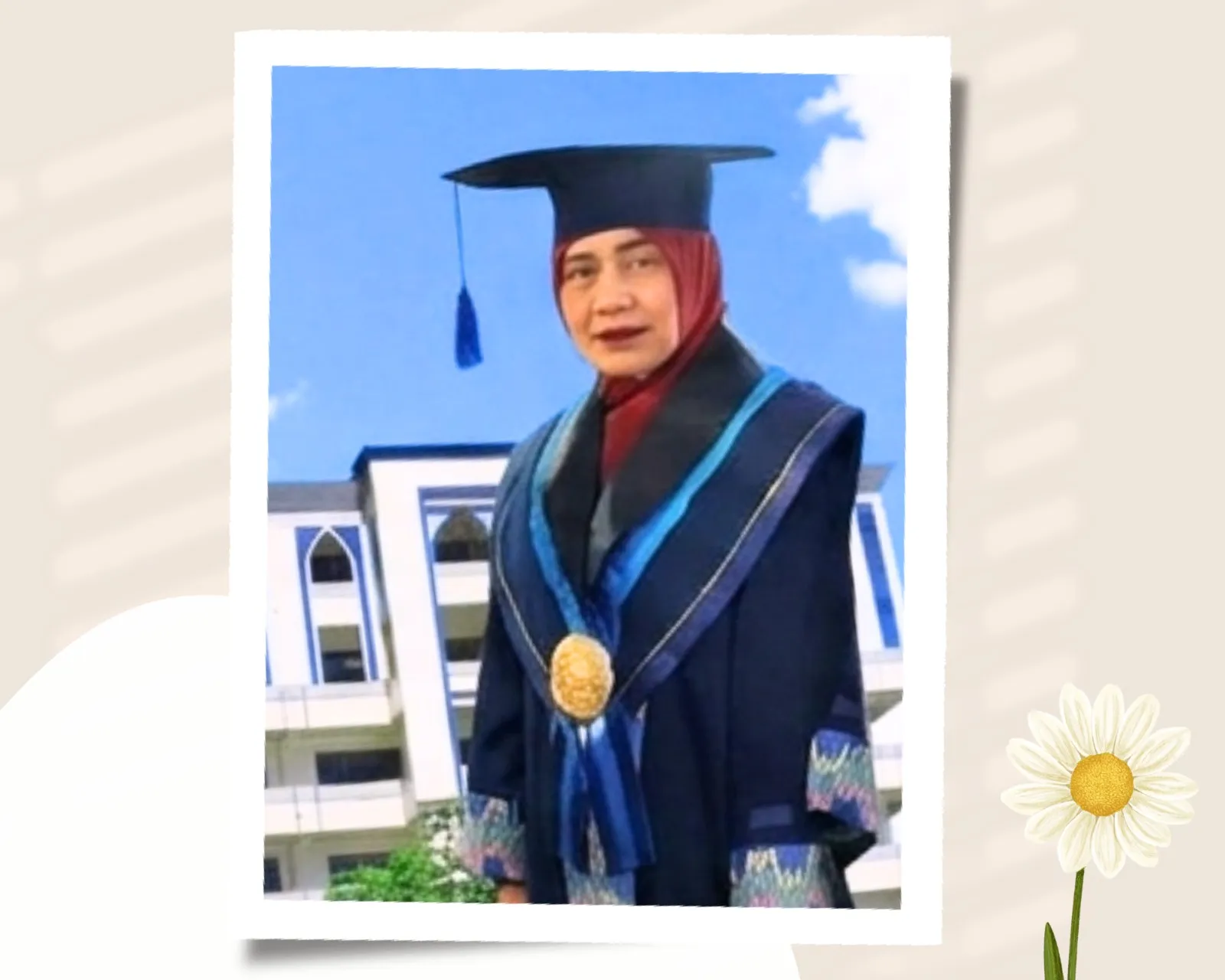
UNISMUH.AC.ID, MAKASSAR — The Kartini Day always brings to mind a word that has never been fully realized: opportunity. The opportunity to learn, to present oneself, to lead, and to participate in public spaces. For Prof Dr Ir Hj Ratnawati Tahir, MSi, Kartini Day is not just a historical marker, but a starting point that affirms that women have the same rights and abilities to play strategic roles in social life.
Prof Ratnawati views Kartini Day as a historical milestone in the struggle for gender equality in public spaces. For her, women's presence in public spaces is not an act of charity, but the result of perseverance and capacity built through a long struggle.
"The meaning of Kartini Day is a historical milestone that drives women's struggle to achieve gender equality and participate in public spaces," said Prof Ratnawati when confirmed on Tuesday, April 21, 2026.
She emphasized that women's struggles in the public sphere should be understood as a statement that women are capable of presenting themselves with their own perseverance. "Women are capable of presenting themselves with their own perseverance, not because they are pitied, but as one of the extraordinary meanings that show that women can hold various strategic positions that are just as important as men," she said.
This view is rooted in her own life experience. Because Prof Ratnawati's academic journey was not always easy. Behind the achievement of being a distinguished professor, there was a waiting period, changes in regulations, and a long-term commitment.
Breaking Through a Long Wait
One of the most memorable challenges for Prof Ratnawati in her academic journey was when she reached the peak of her career as a distinguished professor. According to her, the path to the highest academic position not only requires scientific readiness, but also resilience to face changing regulations. One of the most memorable phases was the four-year moratorium on distinguished professor appointments, which made the wait very long.
"The most memorable challenge in my academic journey was when I was about to reach the highest career level as a distinguished professor with constantly changing rules," she said. "I experienced a fairly long wait when there was a four-year moratorium on distinguished professors," she added.
However, the delay did not extinguish her spirit. The determination to continue moving forward remained. It was this determination that eventually led her to achieve the position of distinguished professor in 2015. This achievement was not only important for her personally, but also historically for Universitas Muhammadiyah Makassar, as she was the first female professor at the university.
"But, the spirit to continue striving remained strong as a woman who had a high ambition to achieve the highest academic career, and Alhamdulillah in 2015, this achievement was realized," said Prof Ratnawati.
On November 24, 2015, Unismuh Makassar officially appointed Prof Ratnawati Tahir as a Professor in the field of Agricultural Sociology in an extraordinary open senate meeting. She became the second professor at Unismuh after Prof Dr Ir Salahuddin. In her inauguration speech, Prof Ratnawati focused on modernizing agriculture as a catalyst for social change among farmers in the context of developing agricultural occupation theory.
This topic showed that her academic achievement was not just about holding a position, but also about being sensitive to social issues. She captured the problem of vulnerability in life, poverty among farmers, food insecurity, and the gap between rich and poor farmers due to differences in status and access. Through sustainable livelihoods, she emphasized the importance of individual and group abilities to mobilize assets and policies to meet their needs and overcome challenges.
At this point, Prof Ratnawati's academic journey appears not only as a career path, but also as an intellectual path to read social changes and formulate possible solutions. Therefore, Kartini's reflection in her view becomes concrete: women are not just symbols, but also producers of ideas and drivers of change.
Women Must Be Brave to Appear
Kartini's message to Prof Ratnawati is not just about her experience. She also places this reflection as a moral supply for female students and young women at Unismuh. She encourages them to never lose their spirit to continue striving for the highest education.
"I encourage female students and young women at Unismuh to never lose their spirit to continue striving for the highest education," she said.
In her view, young women must be brave to fill public spaces, present themselves, and show their true selves. Women, she says, must believe that they can stand alongside men in leadership, not as complements, but as subjects with the ability, ideas, and responsibility.
"Young women must fill public spaces to present and show their true selves as women who can stand alongside men in leadership," said Prof Ratnawati.
This message is important because it comes from an academic who has gone through a long process to achieve the highest position in the academic world. She not only speaks about possibilities, but has proven that women can break through boundaries that once seemed far and difficult to reach.
For Prof Ratnawati, Kartini Day is not just an annual ceremony. It is a reminder that women's struggle is in the form of reality: continuous learning, perseverance in a long process, rejecting submission to limitations, and constantly asserting oneself in public spaces with dignity and ability.
In the Unismuh Makassar environment, Prof Ratnawati Tahir's legacy is one of the important markers of this meaning. From her academic experience, it can be seen that women are present in public spaces not because they are given a place, but because they are capable of filling it. Here, Kartini's message finds its relevance that continues to live, from history to experience, from symbol to example.
Sustainable Development Goals



Related News
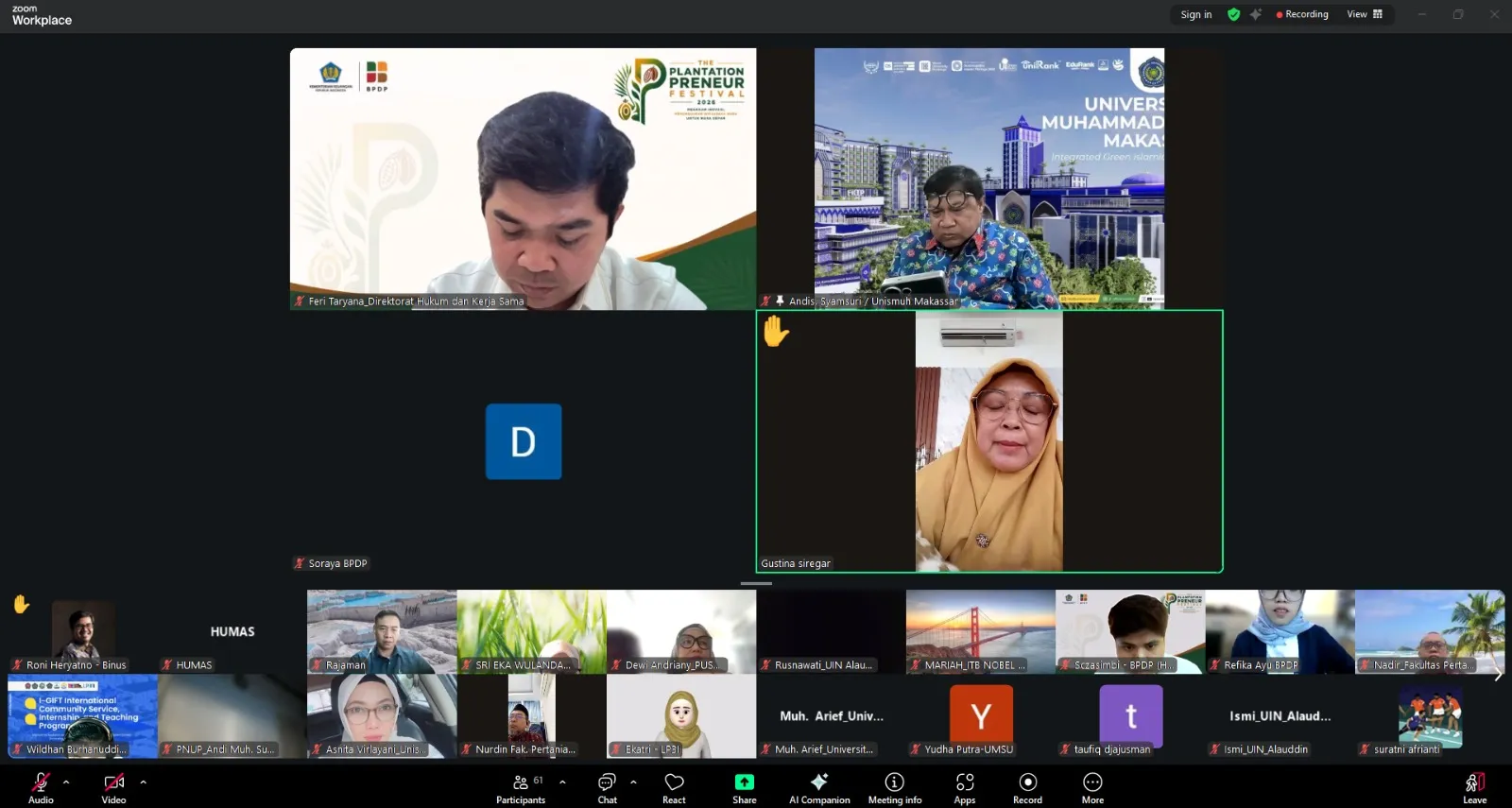
Unismuh Makassar Jajaki Kolaborasi BPDP Kembangkan Wirausaha Muda Perkebunan
13 Jul 2026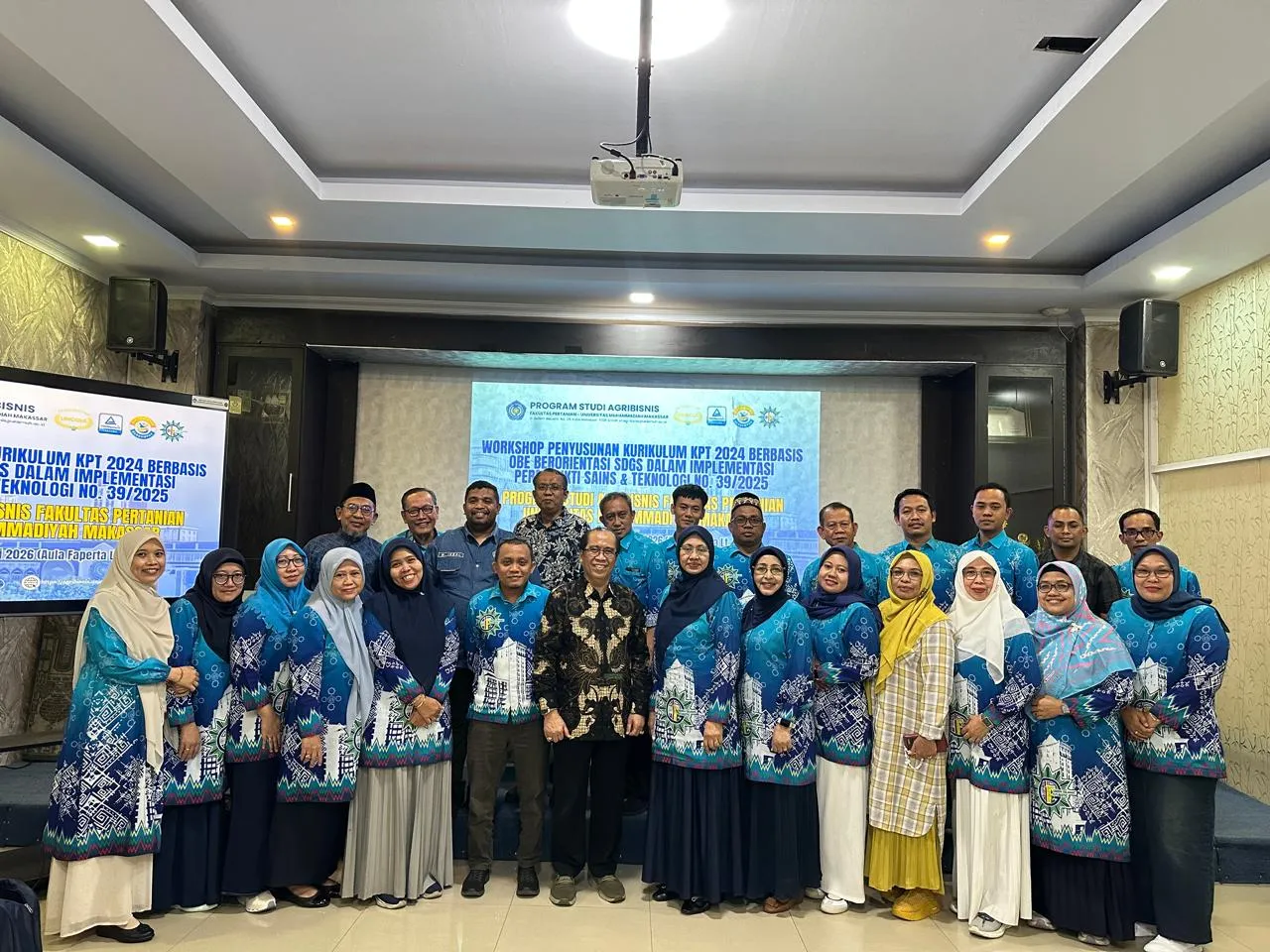
Prodi Agribisnis Unismuh Makassar Gelar Workshop Peninjauan Kurikulum Berbasis Outcome-Based Education
09 Jul 2026
Dosen Pertanian Unismuh Raih Doktor, Teliti Efisiensi Usahatani Kentang
30 Jun 2026